
Brentwood: Detectives secure prison sentence following fatal assault
Main article content
&w=1024&h=682&scale=both&mode=max)
A vengeful drug user who beat a man to death after being confronted over a debt has been jailed following an extensive investigation by our major crime detectives.
John Moore, 39, launched a fatal assault on 63-year-old Francis Reilly in September last year, after Mr Reilly visited the killer’s flat in Ingrave Road, Brentwood.
Moore, who regularly borrowed money from acquaintances to fuel his drug habit, was in debt to Mr Reilly.
Mr Reilly, angry over Moore’s failure to repay him, visited his flat on the afternoon of 12 September to confront him.
The two men argued and a fight developed inside the address.
Mr Reilly had come to the address carrying a small bottle of ammonia, which he attempted to squirt towards Moore.
But Moore, far younger and stronger than Mr Reilly, quickly managed to get the better of him.
Arming himself with a hammer, Moore proceeded to repeatedly beat Mr Reilly with the weapon and threw him against a wall.
Mr Reilly managed to flee the flat, but Moore’s assault continued outside, in view of a taxi driver.
The taxi driver flagged down two of our passing officers, telling them he had just witnessed a man striking another man repeatedly with a hammer.
He added he had noticed the victim of the assault appeared to be pleading with his attacker.
Officers swiftly responded
Our officers immediately approached the scene, finding Mr Reilly with substantial injuries and struggling to breathe.
Mr Reilly told the officers he had been “hit everywhere”, pointing out the nearby Moore as the person responsible.
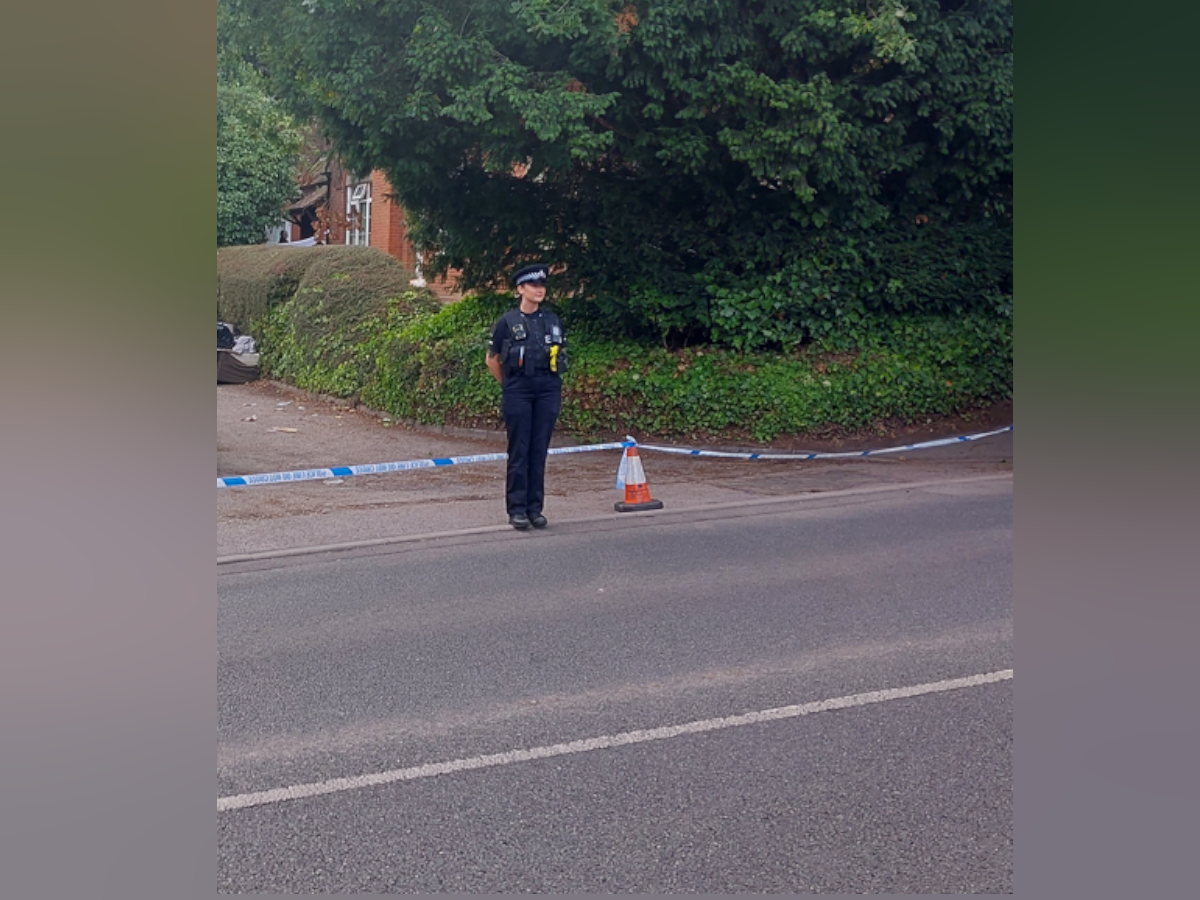
The officers called for paramedics, but sadly Mr Reilly died at the scene at 4.25pm.
Mr Reilly was later found to have suffered catastrophic injuries, including multiple injuries to his face, head, arms and chest – many of which were consistent with blows from a hammer.
He also suffered extensive rib fractures and a collapsed lung, consistent with being thrown against a wall with force.
An investigation was carried out by our dedicated Serious Crime Directorate.
It took in witness statements made by neighbours.
One referenced hearing the sound of “someone being thrown around”.
He further recognised the voice of Mr Reilly shouting “please stop”.
&w=1024&h=900&scale=both&mode=max)
In the immediate aftermath of the incident, Moore claimed the ammonia had been sprayed extensively into his mouth and eyes, causing him extreme discomfort.
But officers recovered the bottle, finding the majority of the liquid had spilled onto the floor of the flat.
A consultant burns surgeon was tasked with examining medical notes detailing any injuries to Moore, as well as our officers’ body worn video footage showing him at the scene and in hospital.
Moore’s version of events was discounted, with the expert finding that although Moore had been exposed to ammonia, there was no evidence to suggest he had experienced significantly adverse effects to his breathing or sight.
Moore denied murder, instead claiming self-defence, and a trial took place at Basildon Crown Court in August.
Referencing the clear evidence gathered by our detectives, the prosecution told the jury Moore’s actions definitively went beyond any reasonable form of self-defence.
The jury failed to reach a verdict on the murder charge.
Moore admitted manslaughter ahead of a planned re-trial – a plea which was deemed acceptable by all parties.
At the same court on Monday 13 October, he was sentenced to six years and two months imprisonment.
&w=1024&h=1024&scale=both&mode=max)
In a previous statement, Mr Reilly’s family said:
“Frankie was a loving father, brother, grandfather and uncle.
“He was greatly loved by his whole family and will be sadly missed.
“We would ask for privacy so we can continue to grieve as a family.”
Detective Inspector Lisa Hurrell, senior investigating officer, said:
“Our case, based on the clear evidence we painstakingly gathered, has always been that Moore was responsible for a determined and brutal assault.
“This sustained attack went far beyond what any reasonable person could call self-defence.
“Whatever Mr Reilly’s motivations for visiting Moore that day, whatever took place between the two men, it was no excuse and no justification for what was to follow.
“Moore told our officers he had been in a ‘life or death’ situation.
“In reality, within moments of his confrontation with Mr Reilly, Moore had turned the tables on him, gaining the upper hand and using that opportunity to exact his revenge.
“He claimed to have suffered mouth and eye injuries as a result of an ammonia attack.
“While it is true Mr Reilly had brought ammonia to the scene, likely with the intention of using it against Moore, there is no evidence that he suffered any significant exposure to this substance.
“Instead, unobstructed and in full control of his actions, he chose to viciously beat Mr Reilly.
“Regardless of the choices he may have made, Mr Reilly had a family and he was loved. He was a father, brother, grandfather and uncle.
“He had loved ones who feel his absence in their lives. Nobody deserves to die in the way he did and it was only right we ensured Moore was unable to get away with his horrific actions that day.”
Victims' code
At Essex Police we put victims at the heart of everything we do. The Victims’ Code explains the rights that everyone can expect to receive as a victim of crime, and helps us define what we must do for all victims from their initial contact with our force until the conclusion of their case.
Find out more about the code and to understand the rights of a victim of crime, on our support for victims and witnesses of crime page.
To report a crime, please use our digital 101 service. In an emergency call 999.
Contacting Essex Police
Do you want to report non-emergency crime, anti-social behaviour or tell us about suspicious behaviour in your community?
You can report it online or use our Live Chat service.
Our Live Chat service is available on our website 24 hours a day, seven days a week. You can send and receive real-time messages with an online operator.
To use the service, select the ‘Live Chat’ icon at the bottom right of your screen when you're on our website.
We still have our 24-hour 101 service which people can call if they feel it is more appropriate to speak to us or don't have access to the internet.
Remember if a crime is happening now and someone is in immediate danger, call 999.
If you have a hearing or speech impairment, use our textphone service 18000 or text us on 999 if you’ve pre-registered with the emergencySMS service.
You can also contact an officer, member of staff or team through our website, submit a general enquiry or provide feedback.